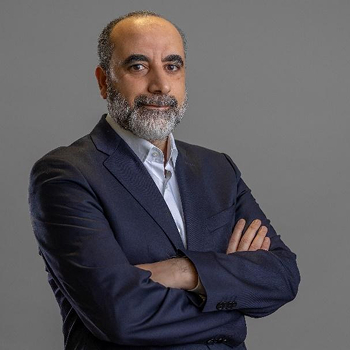
Biography
Dr. Mohamed Ghali is Professor of Islamic Studies and Biomedical Ethics at the Center for Islamic Legislation and Ethics, affiliated with the College of Islamic Studies at Hamad Bin Khalifa University in Qatar. He holds a Bachelor's degree in Islamic Studies from Al-Azhar University in Egypt, and a Master's and Ph.D. degrees in the same discipline from Leiden University in the Netherlands. From 2007 to 2013, he was a faculty member at the University of Leiden.
Dr. Ghali is the founder and editor-in-chief of the magazine "Islamic Ethics" which is listed in the Scopious database published by Brill. In September 2019, he assumed the position of Founding Coordinator of the Master's Program in Applied Islamic Ethics at Hamad Bin Khalifa University. He also chaired the 17th World Bioethics Congress, which was held for the first time in the Arab world and the Middle East. His research interests focus on the study of Islamic ethics and its intersections with biomedical sciences and artificial intelligence.
Islamic ethics and its intersection with biomedical sciences and artificial intelligence are the main focus of Dr. Ghali's research and intellectual interests, and he is the author of Islam and Disability: Perspectives on Faith and Jurisprudence (Routledge, 2010, published in Arabic by Hamad Bin Khalifa University Press in 2019) and "Islamic Ethics and Incidental Consequences: Genomic Ethics Beyond the Secular Framework" (Springer-Nature, 2024). He has also authored and edited several volumes such as "Islamic Perspectives on the Principles of Biomedical Ethics" (Imperial College World Scientific, 2016), "Islamic Ethics and the Genome Question" (Brill, 2019), and "The Ethics of Care in Islam: End-of-Life Healthcare, Dying, and Death" (Brill, 2022). Dr. Ghali is the author of more than forty peer-reviewed papers and is a member of the editorial boards of several prestigious academic journals. He also heads a number of funded research projects, the most recent of which was the "Islamic Studies in the Age of Generative Artificial Intelligence" project.